


The view that parasitic infections are always accompanied by a characteristic clinical picture is erroneous.Usually, helminth infections occur without worrying symptoms.If not treated promptly, it can lead to very harmful consequences, including: body poisoning, diseases of the digestive tract and other internal organs.Parasite detection tests will help determine the presence of foreign organisms and choose the best treatment option.Systematic research is needed for both adults and children.

Timely tests will help avoid various complications when the body is affected by parasites.
Indication of testing
In the majority of cases, infection with parasites in the body is accompanied by characteristic symptoms, which are quite difficult not to notice.But in the early stages of helminth infection, the clinical picture may not be obvious.The presence of protozoa in the human body during this period can only be determined by testing for parasites.
Among the main signs whose presence literally forces a person to get tested for parasites are:
- Itching in the anal area and discomfort mainly at night due to parasites that have laid eggs.
- Digestive disorders, expressed as constipation, diarrhea, nausea, vomiting, and heartburn.
- Fatigue, lethargy, weakness.
- Reduces the body's immunity and resistance, making it susceptible to infectious and viral diseases.
- General malaise, pale skin of the face and body, which is caused by the body's lack of beneficial trace elements, which are absorbed by parasites.
- Loss of appetite or, conversely, excessive appetite.
- Lose weight to a critical level.Usually this only happens if the parasite has long infected the body and the number of individuals is close to a critical level.

Due to non-compliance with basic personal hygiene rules, children of younger ages are most susceptible to parasitic infections.But parasites in adults can also occur.Worm infection is much easier than many people imagine.
To avoid complications and worsening of the condition, tests should be performed at least once or twice a year.Research should be conducted in the summer and fall, as that is when peak disease incidence most often occurs.

Diverse effective methods
Modern practical medicine offers a wide range of different tests to detect the presence of different types of parasites in adults and children, each of which has both clear advantages and disadvantages.To get as close to reliable results as possible, several types of tests should be performed simultaneously.This approach will help identify parasites even in the early stages of infection.
Among the most effective and most frequently used methods are:
- fecal analysis;
- lymphatic analysis;
- check for stains or scratches.
In some cases, when a helminth infection is detected, it is necessary to carry out some additional studies.Methods such as computed tomography, X-ray, and ultrasound can be used.The need is due to the fact that parasitic activity often leads to damage to internal organs and the development of cumulative diseases.

Blood test
Blood tests to detect the presence of most types of parasites in the body are the most reliable compared to other methods and allow you to detect infection even in the early stages.Among the most commonly used methods is the enzyme-linked immunosorbent assay, which is based on the determination of changes in the composition of lymph caused by parasites.
Characteristic pathological changes in the blood are caused by the release of waste products by the parasite and subsequent poisoning of the body.In response to such factors, the body's immune system begins to produce antibodies.It is their number that determines the degree of helminth infection or their absence.
A study of blood composition allows us to determine not only the presence of helminth infection, but also the types of parasites, their approximate number and the degree of damage to the body.To get the most accurate results, certain rules should be followed regarding the blood donation procedure: it is better to collect biological material on an empty stomach and only in the morning.

The reliability of the enzyme immunoassay is about 90% and allows you to identify the largest number of known parasite species.In addition, one of the advantages of studying hemolytic diseases is the ability to identify single-celled microorganisms that parasitize not the intestines, but other organs, such as the lungs or liver.
Stool analysis
Usually, traditional fecal analysis is used to identify parasitic individuals in the human body.This method is only reliable if at least 60 to 90 days have passed since the infection.In addition, stool test results can only detect in the body certain types of parasites that can only parasitize in the intestines, such as: nematodes, flukes, and tapeworms.
As a rule, fecal analysis for parasites is carried out at least two to three times with an interval of several days.This measure is necessary to obtain more reliable results.Conducting a single study often gives false negative results, which is due to the specific characteristics of the life cycle of the parasites.

The analytical procedure includes examining the feces for the presence of eggs, larvae, and adults.If at the time of stool collection there are no parasite eggs in the biological material, the test will give a false negative result despite the actual presence of parasitic infection.To increase the likelihood of obtaining reliable results, some basic rules regarding the submission of biological material should be followed:
- Fecal collection should be done in the morning, no later than 11 a.m. local time.
- The optimal volume of biological material is one third of the standard container for analysis, which can be purchased at any pharmacy, but less may be needed.
- This test is performed when the patient's body and skin around the anus are itchy.This sign shows that in addition to parasites, helminth eggs are also present in the human body.
- Biological material should be sent to the laboratory no later than 30–40 minutes from the time of collection.In this case, the results will be as close to reliable as possible.If this is not possible, biological material must be stored in the refrigerator.

Stool testing for parasites should be done in conjunction with other types of tests to identify helminths.Only testing with two or more methods will give reliable results.Parasitological analysis to detect helminth infections should be repeated at least once a year.Additionally, you should be tested for parasites if any eating disorders occur.
Check scraping
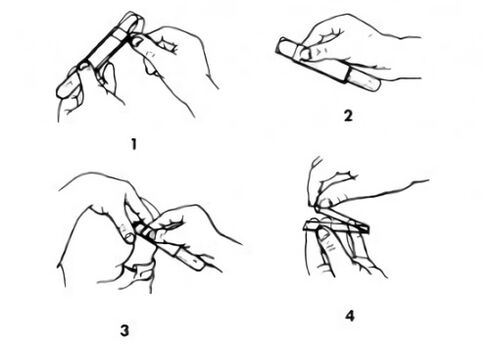
Scraping studies from folds of anal tissue are among the simplest and least reliable.Determining whether there are parasites in the body in this way is possible only if the time of collection of the material coincides with the period of egg laying in the parasitic individual.However, this method is most often used to detect helminth infections in children at a younger age.
During the procedure, biological material is collected from tissue folds in the subject's anus using sterile tape or cotton swabs.To obtain the most reliable results, the analysis should be performed at least three to four times.
Research reliability
To obtain reliable results when conducting any test for the presence of primary parasites requires compliance with all rules regarding the collection of test material.In addition, at least two types of research should be carried out simultaneously, through which it will be possible to identify parasitic individuals not only in the intestines, but also in other organs and tissues.
Less effective in terms of reliability include stool examination and anal scraping.This is because the results of such tests can be falsely negative, both due to the absence of eggs and adults in the stool, and due to basic inattention on the part of the laboratory assistant conducting the analysis.
How to check for the presence of helminths in the body to get the most accurate results?Which parasite tests are most reliable?To promptly identify helminths and start using appropriate therapy, it is necessary to adhere to some basic rules:
- The procedure for carrying out any test must be carried out in accordance with the prescribed rules.
- It is recommended to repeat any type of study at least twice with an interval of several days.
- Biological material should be collected for stool analysis when symptoms such as anal itching and burning appear

It should be remembered that adults should be examined once a year.Children, especially younger ones, are at high risk so they should be checked at least every three months.
Cost of the procedure
The procedure for testing biological material to detect the presence of parasites in the body can be performed in almost any medical facility, both public and commercial.But it should be noted that blood tests to determine parasites are not performed in every clinic, while simpler tests are performed almost everywhere.

How much could this type of research cost?The cost of a blood test can vary significantly depending on the region and type of medical facility.The cost of stool testing is slightly lower.
Periodic testing of biological materials is an important and necessary measure.Timely identification of parasitic individuals will eliminate the body's intoxication and promptly apply treatment therapy.Failure to complete treatment can lead not only to toxicosis, that is, poisoning of the body with helminthic waste products, but also to the development of inflammatory diseases of internal organs.